
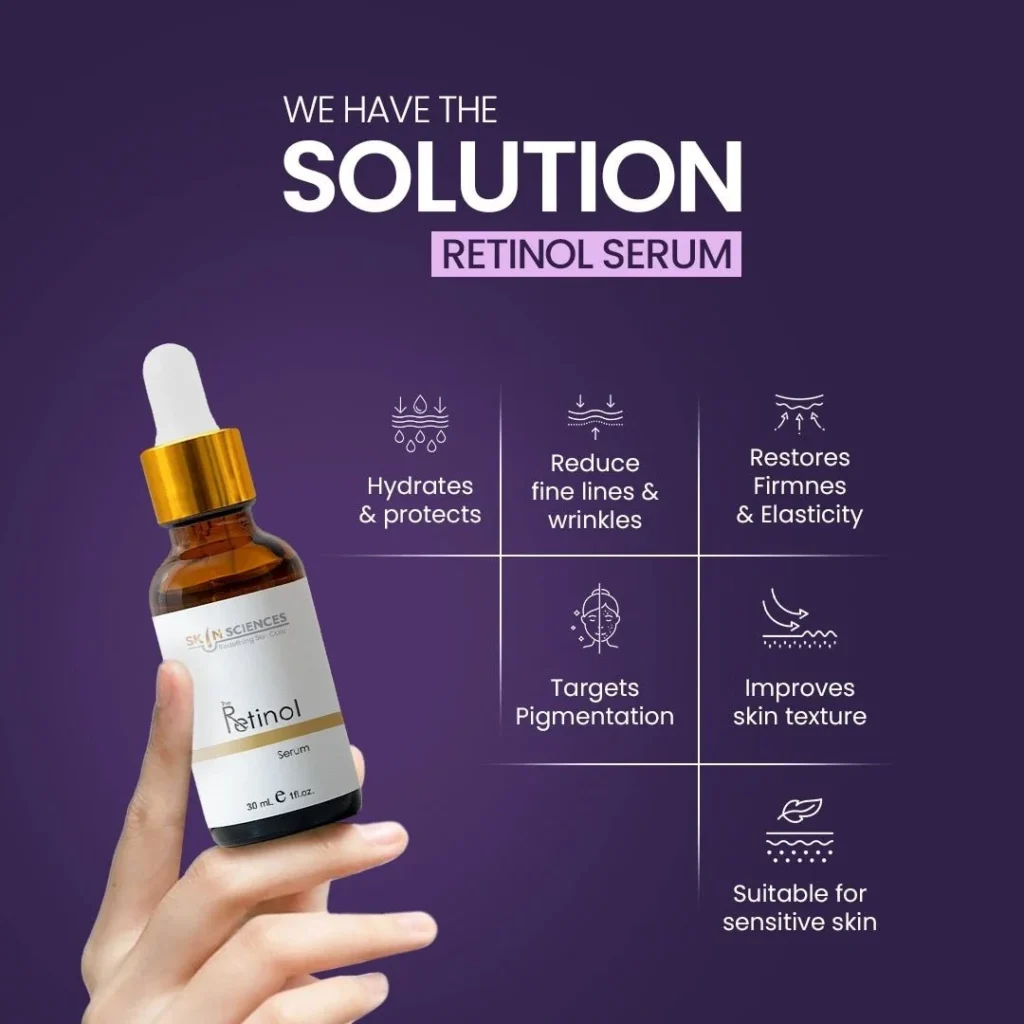
If your skin has started feeling tight, dry, or stretched after using retinol, especially just a few minutes after you apply it, you’re not imagining things and you’re definitely not alone. It’s one of the most common things people notice when they first start using retinol. Once you understand why it happens, it stops feeling worrying and becomes something you can easily manage.
What’s Actually Causing the Tightness
Retinol speeds up your skin’s natural process of shedding old cells and making new ones. This is a good thing for your skin over time. But it comes with a short term catch. It can temporarily disturb your skin barrier which is the outer layer that keeps moisture in and keeps irritation out.
When that barrier gets disturbed your skin loses water more easily. This is sometimes called water loss through the skin or TEWL. When your skin holds less moisture it feels less soft and less stretchy on the surface. That tight feeling you notice is basically your skin telling you it lost some of its usual moisture.
Retinol isn’t drying your skin out the way something harsh like alcohol would. It’s more that your skin is just temporarily not holding onto water the way it normally does.
Retinol can also cause a small amount of inflammation while your skin adjusts to it. Skin that’s inflamed tends to feel tighter and more sensitive when you touch it, when it gets cold or warm, or even just when you smile or make expressions.
Is This the Same as Purging?
No, tightness and purging are different things and it helps to know the difference between them.
- Purging happens when retinol speeds up the process of pushing congestion to the surface
- That congestion was already forming under your skin before you even started using retinol
- It just shows up faster because retinol is doing its job
- Tightness works differently, since it comes from your skin barrier being disturbed and losing moisture
- It’s simply a physical feeling caused by dryness and mild irritation, and it has nothing to do with breakouts
- You might notice one of these, both of them, or neither at all
- It really depends on your skin type and how you’ve set up your retinol routine
When Tightness Is Normal vs. When It’s a Sign to Adjust
Likely normal:
- Mild tightness in the first 1–3 weeks of starting retinol
- Tightness that eases within an hour or two after application
- Tightness paired with slight flaking, but no significant redness or burning
Worth adjusting your routine:
- Tightness that feels painful, cracked, or accompanied by burning
- Tightness that persists all day, not just after application
- Visible redness, swelling, or skin that feels hot to the touch
If you’re in the second category, it’s a sign your skin barrier needs more support before continuing at your current frequency or strength.
How to Reduce the Tightness
Moisturize right after you apply retinol. Putting on a barrier supporting moisturizer just after retinol or even mixing a small amount of moisturizer with your retinol helps make up for the lost moisture without taking away from how well retinol works.
Try the sandwich method. Put on a layer of moisturizer first then retinol then another layer of moisturizer on top. This softens how much contact your skin has with retinol while still letting it soak in and do its job.
Cut back how often you use it for now. If the tightness feels strong bring it down to two nights a week for a couple of weeks then slowly build back up as your skin gets used to it.
Give your barrier some support with ceramides and hyaluronic acid. These ingredients help rebuild your skin’s moisture barrier and help it hold onto water better which works directly against what’s causing the tightness.
Skip heavy exfoliating while you’re using retinol. Using retinol together with strong AHAs BHAs or physical scrubs adds up to more barrier disruption and makes tightness and irritation worse instead of better.
Does the Tightness Go Away?
For most people, yes it does. As your skin gets used to retinol, usually somewhere between 4 to 8 weeks, your cell turnover settles down and your barrier starts to adapt. That means less moisture loss and less tightness every time you use it. This is exactly why dermatologists often say to start low and go slow with retinol. It’s not only about avoiding irritation. It’s really about giving your skin barrier enough time to adjust to this new pace of turnover without feeling constantly disrupted.
The Bottom Line
Tightness after using retinol is simply your skin’s barrier and hydration reacting, not a sign that retinol is hurting your skin. For most people it’s just a normal part of getting used to the product and it usually gets better with a few simple fixes. Adding more moisture, slowing down how often you use it, and giving your skin barrier the ingredients it needs to rebuild can all help a lot. But if it ever turns into pain, burning, or discomfort that lasts all day, that’s a clear sign from your skin that it’s time to ease off before continuing.


